


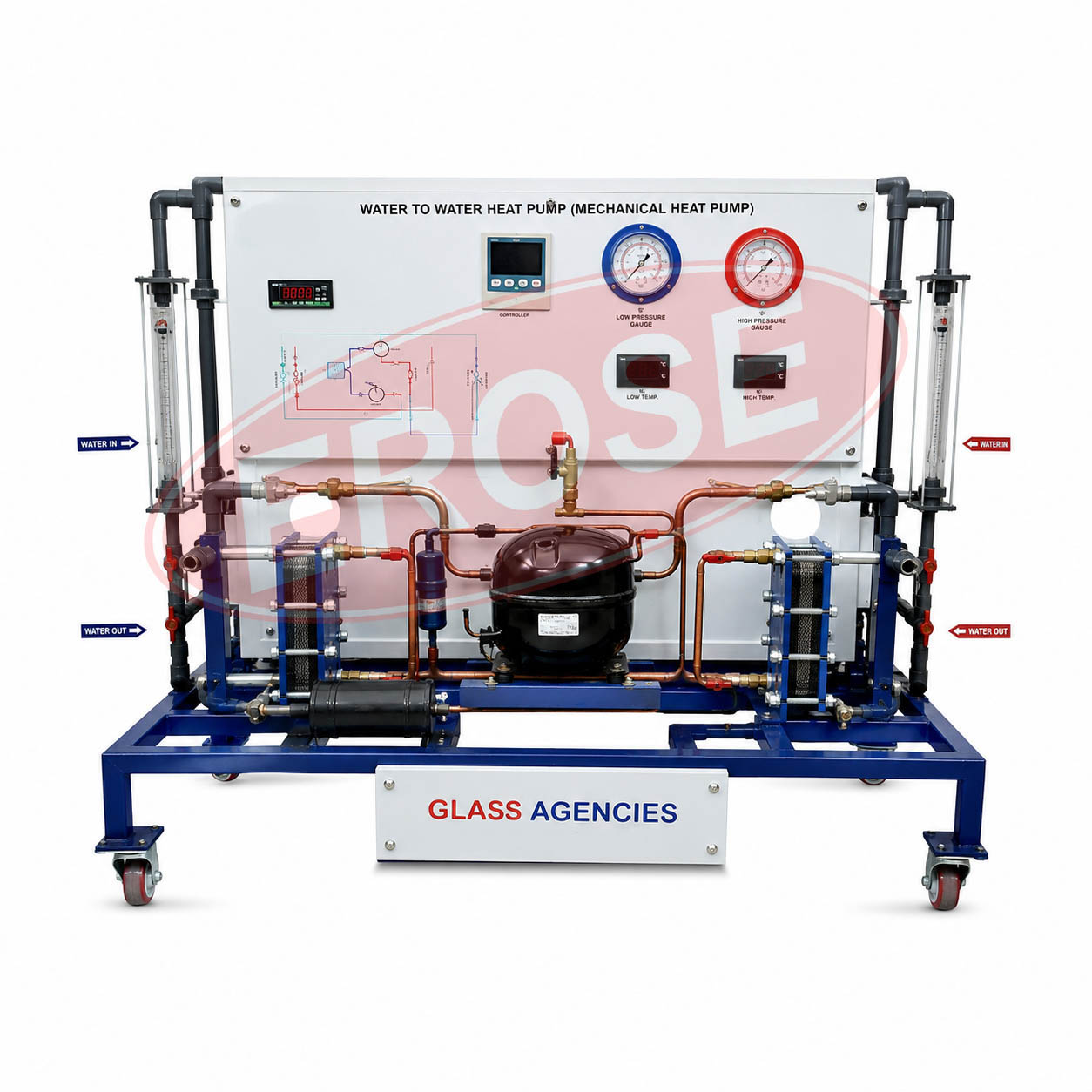
Glass Agencies presents the Water for Water Heat Pump (Water Heat Pump), a laboratory structure designed to provide realistic insight into the operation of a heat pump, energy transport, and thermodynamic ethics. The present device enables students, experts, and technical apprentices to study the heating and cooling procedures of a water-to-water organization under controlled atmospheres. The heat pump operates in a cycle of vapor compression and includes all vital components, such as condensers, capacitors, evaporators, expansion devices, and circulation pumps, which are effective in both heating and cooling. One water cringle absorbs heat during the alternative cull heat, exemplifies the essential principles of energy transport in a couple aqueous medium, and provides a clear insight into organisational productivity. The device shall be equipped with precise instrumentation comprising a strain gauge, a thermometer, a flowmeter, and a temperature detector to monitor central parameters identical to suction and discharge forces, capacitor and evaporator temperatures, and water flow rates. This measurement enables the user to calculate performance measures that benefit from the capacity to heat and cool the premises, the coefficient of performance (COP), and, in general, energy performance below the specific operating conditions. The transparent panel and easy conduits enable a visual image of the movement of the refrigerant and allow a view of its function and structure during operation. The safety features, including overload protection and emergency shutdown, ensure protected operation during the experiment. The current heat pump is designed to be used frequently in laboratories, technical training institutes, and research centers, together with robust components and precise adjustment. Glass Agencies ensure that the equipment provides stable operation, target measurements, and hands-on exposure for water heat pump technology. It provides a productive platform for understanding liquid-to-liquid energy transport, thermodynamic circles, and system performance evaluation in a controlled and safe ecosystem, connecting speculative insights with real-world applications competently for students and researchers.
Refrigeration & Air Conditioning Lab Equipment 

Water to Water Heat Pump (Mechanical Heat Pump)
Glass Agencies offers the Erose Water to Water Heat Pump Trainer, perfect for demonstrating thermal energy transfer in HVAC and mechanical systems.
Enquire Via Whatsapp
Related products


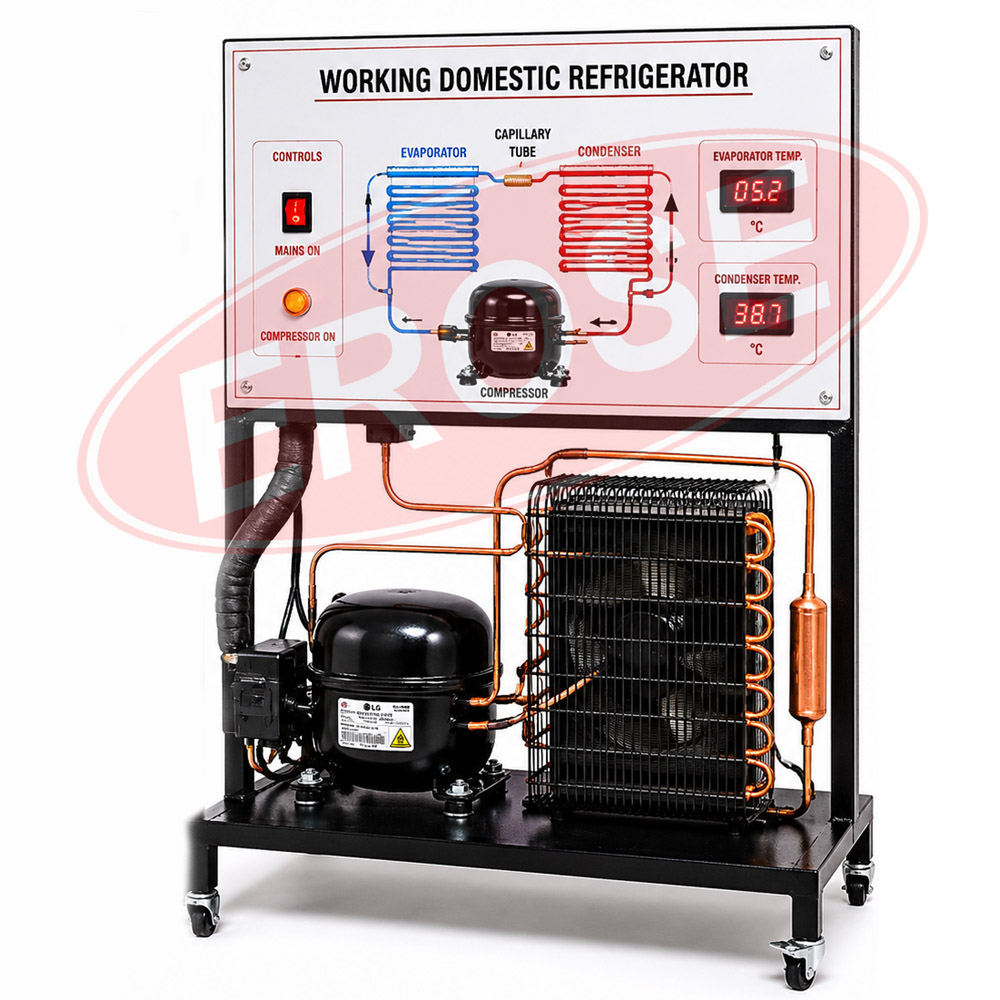
Working Domestic Refrigerator
Refrigeration & Air Conditioning Lab Equipment
Working Hermetically Sealed Compressor
Refrigeration & Air Conditioning Lab Equipment
Vapour Compression Refrigeration System Test Rig.
Refrigeration & Air Conditioning Lab Equipment
Reviews
There are no reviews yet.