


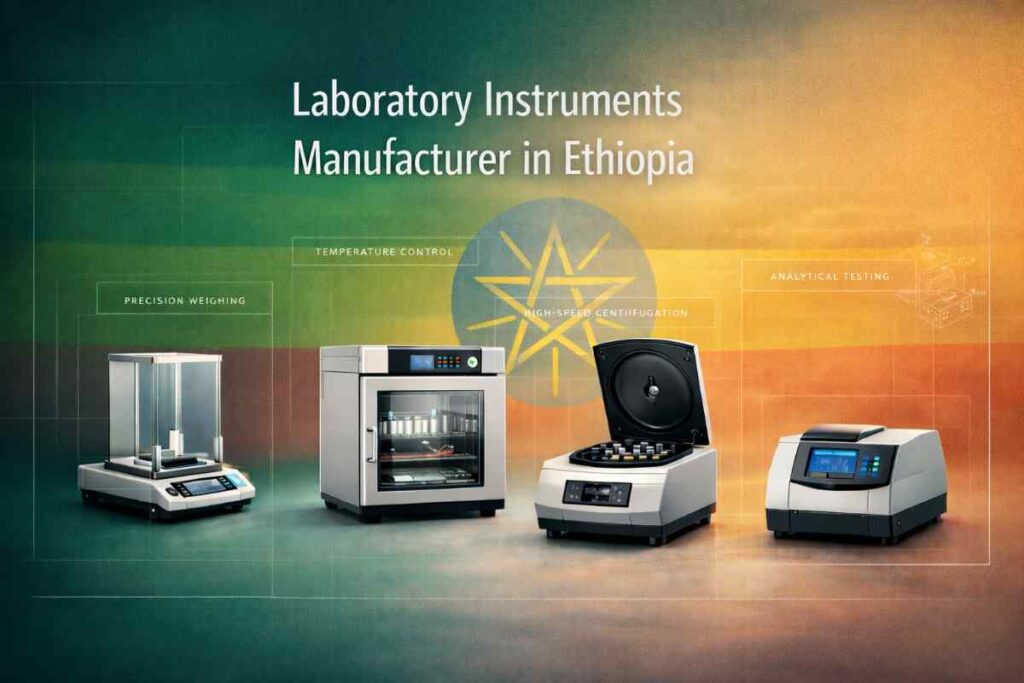
Ethiopia has emerged as a fast-growing hub for scientific development, industrial production, healthcare expansion, and academic research. At the center of this progress stands the laboratory instruments manufacturing sector, supplying reliable and application-driven equipment to laboratories across the country. A laboratory instruments manufacturer in Ethiopia plays a vital role in strengthening scientific accuracy, operational efficiency, and technological independence for institutions that depend on precise testing and analysis.
Laboratory instruments are the backbone of scientific work. Whether used in routine quality checks or advanced research environments, these instruments directly influence the credibility of results. Manufacturers in Ethiopiafocus on building instruments that are robust, precise, and adaptable to diverse laboratory conditions, ensuring consistent performance across multiple sectors.
Rising Demand for Laboratory Instruments in Ethiopia
The demand for laboratory instruments in Ethiopia has increased steadily due to growth in pharmaceuticals, healthcare diagnostics, food processing, textile testing, environmental monitoring, and higher education. Laboratories today require equipment that can deliver repeatable results while maintaining operational stability under continuous use.
A laboratory instruments manufacturer in Ethiopia addresses these demands by developing equipment tailored to regional laboratory workflows, climatic conditions, and power environments. Local manufacturing also reduces dependency on imports, shortens lead times, and ensures better technical support.
Importance of Local Manufacturing
Local manufacturing of laboratory instruments offers strategic advantages that imported equipment often cannot match. Manufacturers operating within Ethiopia understand the practical challenges faced by laboratories and design equipment accordingly.
- Shorter procurement and delivery timelines
- Cost-effective production without compromising quality
- Better alignment with local laboratory standards
- Quick availability of spare parts and servicing
- Direct communication between users and manufacturers
These advantages make locally manufactured laboratory instruments a practical and sustainable choice for long-term laboratory operations.
Types of Laboratory Instruments Manufactured
General Laboratory Instruments
General laboratory instruments are essential for day-to-day laboratory activities. Manufacturers in Ethiopia produce equipment designed for durability, safety, and ease of use.
- Hot air ovens
- Laboratory incubators
- Water baths
- Centrifuges
- Magnetic stirrers
These instruments are built to handle continuous workloads while maintaining consistent performance.
Analytical and Measurement Instruments
Accurate measurement is critical in scientific and industrial testing. Analytical instruments manufactured in Ethiopiafocus on precision, calibration stability, and reliability.
- Analytical and precision balances
- pH meters and ion meters
- Conductivity and TDS meters
- Temperature and humidity controllers
These instruments are widely used in pharmaceuticals, food quality testing, water analysis, and chemical laboratories.
Clinical and Diagnostic Laboratory Equipment
Clinical laboratories rely on dependable instruments for sample processing and routine diagnostics. Manufacturers develop equipment that supports efficiency while maintaining safety standards.
- Clinical centrifuges
- Sample mixers and shakers
- Sterilization units
- Heating and drying equipment
Design priorities include user safety, ease of cleaning, and consistent operational output.
Laboratory Glassware and Accessories
Alongside instruments, manufacturers often supply laboratory glassware and accessories required for experimental and analytical work.
- Beakers, flasks, and measuring cylinders
- Pipettes and burettes
- Reagent bottles
- Test tubes and racks
Products are manufactured to ensure dimensional accuracy and resistance to chemical and thermal stress.
Manufacturing Standards and Quality Control
Quality assurance is a critical component of laboratory instruments manufacturing in Ethiopia. Manufacturers follow structured processes to ensure consistency and reliability.
- Selection and inspection of raw materials
- Precision fabrication and machining
- Controlled assembly procedures
- Functional and safety testing
- Final inspection and documentation
These quality measures help ensure that each instrument performs accurately throughout its service life.
Customization and Client-Specific Solutions
Laboratories differ in size, application, and workflow. A laboratory instruments manufacturer in Ethiopia often provides customization options to meet specific requirements.
- Customized capacities and dimensions
- Voltage and power configuration options
- Workflow-oriented design modifications
- Specialized accessories and controls
Customization improves laboratory efficiency and allows instruments to integrate seamlessly into existing setups.
Support for Education and Research
Educational institutions and research laboratories depend on instruments that support both learning and experimentation. Manufacturers design equipment that balances accuracy with user-friendly operation.
- Equipment aligned with academic curricula
- Safe designs for student use
- Clear operating manuals
- Long-term service support
Such support helps build scientific skills and research capability across institutions.
Industry Applications
Healthcare and Diagnostics
Hospitals and diagnostic centers use laboratory instruments for routine testing, sample preparation, and quality assurance.
Pharmaceutical and Chemical Industries
Pharmaceutical laboratories rely on laboratory instruments for formulation development, stability studies, and quality control.
Food, Agriculture, and Textile Testing
Laboratories involved in food safety, agriculture, and textiles use instruments for compliance testing and quality evaluation.
Environmental Monitoring
Environmental laboratories depend on analytical instruments to test water quality, air pollution, and soil conditions.
Packaging, Delivery, and After-Sales Support
Manufactured laboratory instruments are packaged using protective materials to prevent damage during transportation. Manufacturers also emphasize after-sales service to ensure long-term performance.
- Secure packaging for sensitive components
- Installation and commissioning guidance
- Technical documentation and training
- Maintenance and repair support
Advantages of Choosing a Manufacturer in Ethiopia
- Direct access to manufacturing expertise
- Faster response to technical needs
- Reduced operational costs
- Reliable long-term support
- Contribution to national industrial growth
Future Outlook
The laboratory instruments manufacturing sector in Ethiopiacontinues to advance with improvements in engineering, quality systems, and product innovation. As scientific and industrial activity expands, locally manufactured instruments will play an increasingly important role in supporting accuracy, compliance, and research development.
Conclusion
A laboratory instruments manufacturer in Ethiopiasupports laboratories across healthcare, education, industry, and research by delivering dependable, precision-built equipment. Through quality-focused manufacturing, customization, and responsive support, manufacturers contribute significantly to the growth of scientific infrastructure and sustainable laboratory operations.