


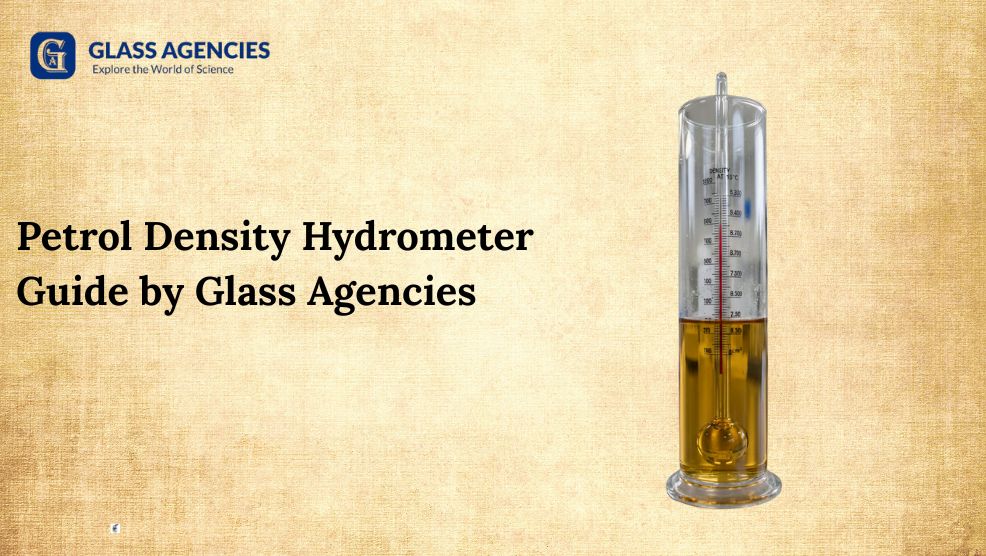
A petrol density hydrometer helps you check petrol density with simple steps. You get fast readings. You protect your fuel quality. Glass Agencies supplies hydrometers built for routine testing.
What a Petrol Density Hydrometer Does
A petrol density hydrometer floats in petrol. The depth gives you the density value. You use this tool in labs, fuel stations, fleets, and depots. You confirm if petrol matches the approved range.
Petrol density links to energy content. Low density reduces energy. High density affects performance. You track these values to control quality.
Why You Test Petrol Density
• You confirm batch quality
• You detect contamination
• You control purchase loss
• You protect engines
Common density for petrol stays between 715 to 780 kg per cubic meter. A shift outside this limit signals problems.
How to Use a Petrol Density Hydrometer
1. Fill a clean container with fresh petrol
2. Let bubbles settle
3. Measure temperature
4. Lower the hydrometer gently
5. Wait for stable floating
6. Read the value at eye level
7. Record temperature and apply correction
Fuel standards follow 15 degrees Celsius. You adjust readings using the correction chart provided with the instrument.
Where You Use It
• Automotive labs
• Oil depots
• Retail petrol stations
• Government fuel testing units
• Transport fleets
• Research labs
Each sector checks density before storage, dispatch, or refilling.
Features You Look For
• Strong glass body
• Clear scale
• Proper weighted bulb
• Supported correction chart
• Matching density range
These points keep your readings steady.
Glass Agencies Advantages
Glass Agencies supplies petrol density hydrometers built for heavy testing use. You get clear markings. You get stable floating. You get consistent readings across checks.
Action Steps for Better Results
• Use fresh samples
• Use a wide mouth cylinder
• Keep the hydrometer straight
• Avoid contact with the walls
• Read at exact fuel level
• Log all readings
• Store in padded case
These steps protect your instrument and improve your process.
Care Routine
Clean the hydrometer after each test. Rinse with a safe solvent. Dry with a soft cloth. Store it inside a protective case. Keep it away from high heat.
How Density Affects Your Operations
Low density signals lighter fuel. High density signals contamination or mixing. Your hydrometer reading gives you a direct warning. You act before the fuel enters your system.
Transport firms track density in long routes. Labs track density shifts in storage tanks. Retail outlets test each incoming tanker.
Benefits You Get With Glass Agencies Hydrometers
• Simple use
• Fast testing
• No power needed
• Portable form
• Low maintenance
• Supports multiple fuel checks
You improve your testing routine with minimal effort.
Final Insight
A petrol density hydrometer supports strong fuel monitoring. Glass Agencies helps you maintain control of fuel quality with dependable instruments. You use simple steps. You get clear readings. You keep your operations stable.